

Introduction
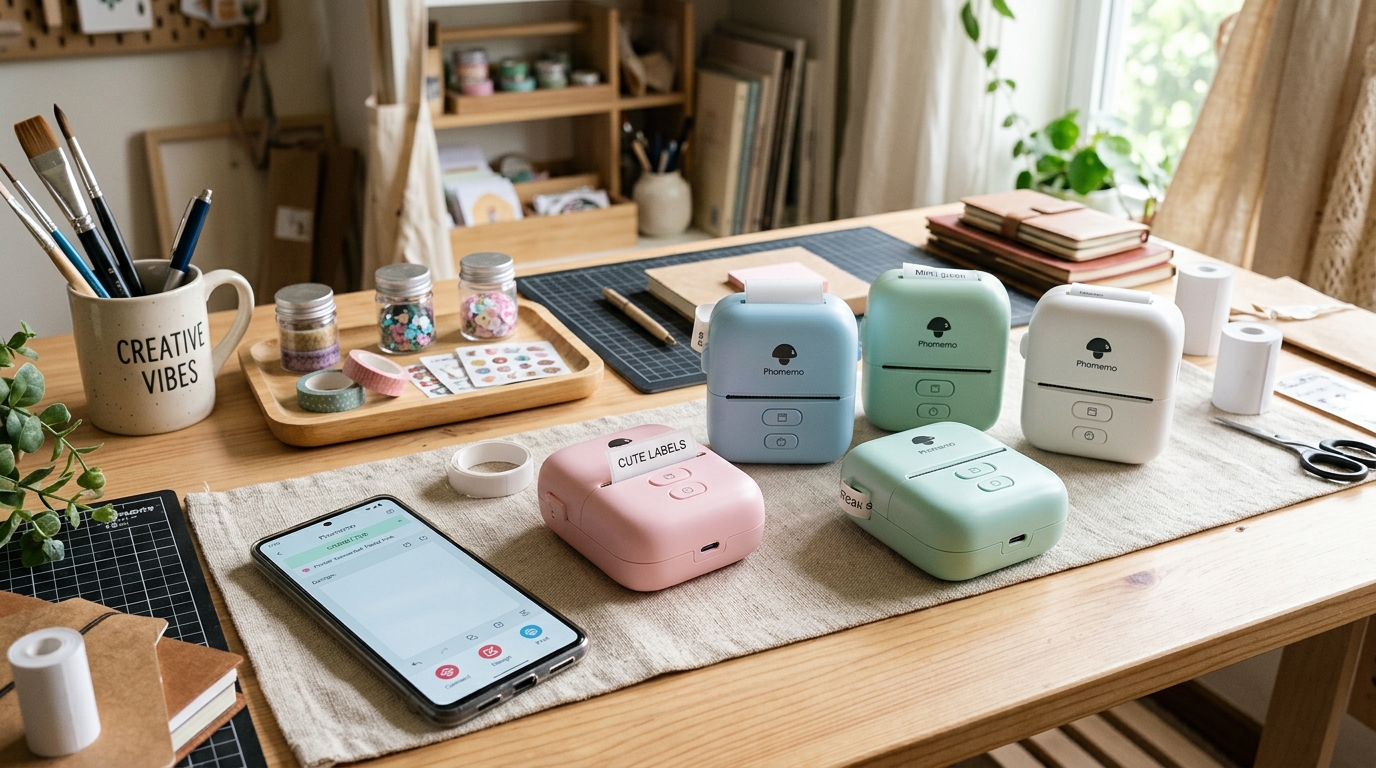
The Phomemo lineup of thermal label printers has expanded significantly, offering a variety of models tailored to different user needs and preferences. Among the most popular compact models are the D30, Q30, Q30S, A30, and P15.
Navigating the differences between these models and understanding their specific setup procedures can be daunting for new users. The D30 is a classic, well-loved model known for its portability and wide range of colorful label options.
The Q30 and Q30S series introduced a more streamlined design and improved print resolution, catering to users who need sharper text and barcodes. The A30 offers a unique form factor and extended battery life, ideal for prolonged use in retail or inventory settings.
Meanwhile, the P15 stands out with its versatile label compatibility and robust build quality. Despite their differences in design and feature sets, all these models share a common reliance on thermal printing technology and Bluetooth connectivity.
This means that the core setup process—loading labels, pairing the device, and configuring the app—remains largely consistent across the board. However, nuances in label loading mechanisms, button configurations, and app compatibility require specific attention.
In this comprehensive guide, we will break down the key differences between the Phomemo D30, Q30, Q30S, A30, and P15, and provide a detailed, step-by-step setup guide applicable to all these models. By understanding the unique characteristics of your specific printer and following our expert setup instructions, you can ensure optimal performance and avoid common pitfalls.
Whether you are organizing your home, managing a small business, or simply exploring the world of thermal printing, this guide will equip you with the knowledge you need to get the most out of your Phomemo device. Let's explore the distinguishing features of these models and master the setup process.
Why This Happens
Confusion during the setup of Phomemo printers often arises from the subtle variations in design and functionality across different models. While the underlying technology is similar, the physical execution can vary.
For instance, the label loading mechanism might differ slightly; some models require the label roll to be placed with the printable side facing up, while others require it facing down. Incorrectly loading the labels is a primary cause of blank prints, as the thermal print head cannot apply heat to the correct side of the paper.
Additionally, the alignment of the labels is crucial. Thermal printers rely on optical sensors to detect the gaps between labels, ensuring that each print is perfectly centered.
If the label roll is not snug against the paper guides or is inserted askew, the sensor may fail to detect the gaps, resulting in misaligned prints, skipped labels, or continuous feeding. Furthermore, navigating the companion app can be a source of frustration.
Phomemo offers different apps, such as Print Master and the Phomemo app, and selecting the correct one for your specific model is essential for seamless connectivity and printing. Within the app, configuring the correct label size and type is paramount.
Selecting a continuous label setting when using die-cut labels, or vice versa, will lead to formatting errors and wasted labels. Understanding these common points of failure and the specific requirements of your printer model is the first step toward a successful setup.
By paying close attention to the label loading orientation, alignment, and app configurations, you can avoid these common issues and achieve perfect prints every time.
Step-by-Step Fix
- Unboxing and Initial Charge: Carefully unbox your Phomemo printer (D30, Q30, Q30S, A30, or P15). Before attempting to use it, connect the provided USB cable and charge the device fully. A solid green or white light usually indicates a full charge.
- Download the Correct App: Identify the recommended app for your specific model. The D30 typically uses the 'Print Master' app, while others might prefer the standard 'Phomemo' app. Download the appropriate app from the App Store (iOS) or Google Play Store (Android).
- Open the Paper Compartment: Locate the release latch or button on your printer to open the paper compartment. This mechanism varies slightly by model but is usually located on the top or side of the device.
- Insert the Label Roll: Take a roll of compatible Phomemo thermal labels. Ensure the printable side (the smoother side) is facing the thermal print head. In most models, this means the labels should unroll from the bottom, facing upwards toward the exit slot.
- Align the Labels: Pull a small amount of the label past the exit slot. Adjust any internal paper guides to ensure the roll sits snugly and straight. Close the compartment lid firmly until it clicks into place.
- Calibrate the Printer (If Applicable): Some models require calibration to detect the label gaps. Press the power button once quickly. The printer should feed a single blank label and stop perfectly at the gap. If it feeds continuously, the labels are likely loaded incorrectly.
- Power On and Enable Bluetooth: Press and hold the power button to turn on the printer. Ensure Bluetooth is enabled on your smartphone or tablet. Do NOT pair through the system settings.
- Connect via the App: Open the downloaded app. Tap the 'Connect Printer' or 'Add Device' icon. The app will scan for your printer model. Select it from the list to establish a connection.
- Select Label Size in App: Within the app's editing interface, carefully select the exact size and type of the label roll you installed (e.g., 12x40mm, Continuous, Die-cut). This step is critical for proper alignment.
- Print a Test Label: Create a simple text label in the app and tap 'Print'. Verify that the text is centered and clearly printed. If the print is faint, you can adjust the print density settings within the app.
Advanced Troubleshooting
If you have followed the step-by-step setup guide and are still experiencing issues, such as poor print quality, connectivity drops, or paper feeding errors, advanced troubleshooting can help pinpoint the problem. Poor print quality, characterized by faded text or vertical white lines, is often caused by a dirty print head.
The thermal print head is a delicate component that applies heat to the paper. Over time, residue from the label adhesive or environmental dust can accumulate on the print head, insulating it and preventing proper heat transfer.
To resolve this, power off the printer, open the paper compartment, and gently clean the print head (the thin black line usually located near the paper exit) using a cotton swab lightly moistened with isopropyl alcohol. Allow it to dry completely before powering the printer back on.
If vertical lines persist, the print head may be permanently damaged and require replacement. Another advanced issue involves persistent paper feeding errors, where the printer continuously feeds blank labels despite correct loading and calibration.
This can indicate a malfunction or obstruction of the optical sensor. Inspect the area around the label exit path for any bits of torn paper or adhesive residue blocking the sensor.
Carefully clean the sensor area with a dry cotton swab. If the sensor is clean and the issue continues, a firmware update or a hard reset may be necessary.
Finally, if you experience frequent Bluetooth disconnections, especially in crowded environments, try resetting the printer's network settings or ensuring that no other strong RF signals are interfering with the connection. Consistently updating the app and printer firmware is also crucial for maintaining optimal performance and resolving known bugs that could cause these advanced issues.
For users seeking to maximize the utility of their Phomemo printers, exploring advanced app features can significantly enhance productivity. Both the Print Master and Phomemo apps offer features like batch printing, barcode generation, and importing data from Excel spreadsheets.
Batch printing allows you to print multiple labels with sequential numbers or varying data from a single template, saving considerable time during inventory management or mass mailing. Barcode generation is particularly useful for retail applications; ensure you select the correct barcode format (e.g., Code 128, QR code) and that the printed barcode is scannable with your intended reader.
When importing data from Excel, ensure your spreadsheet is properly formatted, with each column corresponding to a specific text field on your label template. Taking the time to master these advanced software features will elevate your thermal printing experience from simple labeling to sophisticated data management and organization.
Furthermore, experimenting with different types of Phomemo label media, such as transparent, waterproof, or patterned labels, can expand the creative and practical applications of your printer. Always remember to adjust the print density settings in the app when switching to different label materials to ensure optimal print quality and durability.
FAQ
What is the difference between the Q30 and Q30S?
The primary difference between the Q30 and Q30S lies in minor design updates and occasionally included accessories. Functionally, they operate identically, using the same print head technology and app interface.
Why is my Phomemo printer printing blank labels?
The most common reason for blank labels is that the label roll is inserted upside down. Thermal printers only print on one side of the paper (the side with the thermal coating).
Can I use third-party labels in my Phomemo printer?
While some third-party thermal labels may physically fit and print, using official Phomemo labels is highly recommended. Phomemo labels are formulated for optimal contrast and longevity with their specific print heads.
How long does the battery last on these models?
Battery life varies by model and usage. The A30 generally offers the longest battery life due to a larger internal battery.