

Introduction
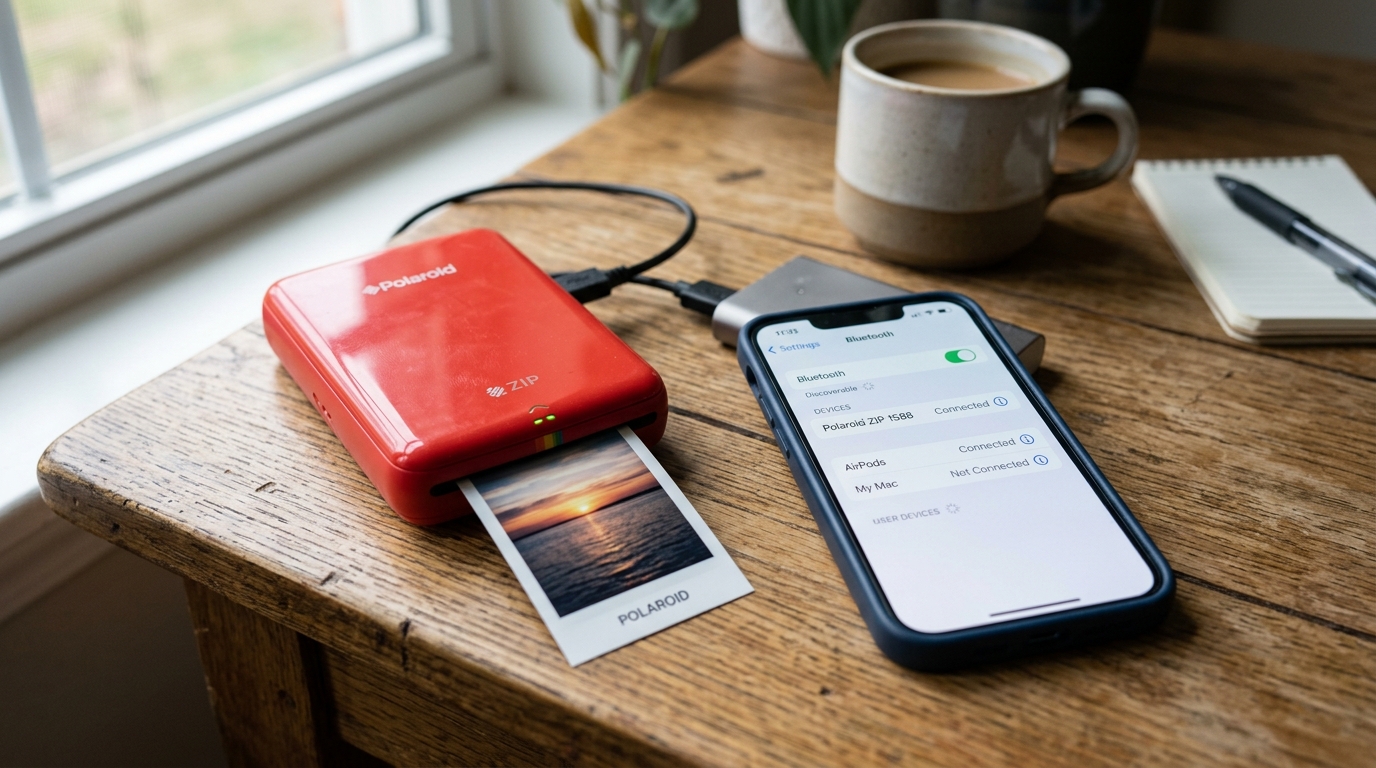
Setting up and maintaining a Polaroid Zip or GL10 mobile printer can be incredibly rewarding,. It often comes with a set of technical challenges that can frustrate even the most tech-savvy users.
These compact, inkless printers use ZINK (Zero Ink) technology, relying on heat to activate color crystals embedded in the paper. When this process goes smoothly, you get instant, high-quality prints directly from your smartphone or tablet.
However, a variety of issues can arise during setup, pairing, or the printing process itself. Whether you are dealing with Bluetooth connectivity drops, paper jams, battery charging issues,.
Poor print quality, understanding the underlying mechanisms of your mobile printer is crucial. This comprehensive guide will walk you through the setup process.
Troubleshoot common problems encountered with the Polaroid Zip and GL10 mobile printers. By following these steps, you will be able to resolve connectivity issues, fix hardware glitches,.
Ensure that your ZINK paper delivers the best possible photo quality every single time.
The transition from traditional inkjet and laser printing to portable. Heat-based ZINK technology requires a shift in how we approach maintenance and troubleshooting.
Unlike desktop printers, mobile printers rely heavily on wireless communication protocols, battery health, and specialized media. Furthermore, the companion applications on iOS and Android devices add another layer.
Of software dependencies that must be kept up to date. In this article, we will break down each component of the Polaroid Zip.
GL10 systems, providing you with actionable, step-by-step solutions to overcome any hurdle. We will explore network settings, Bluetooth caching, thermal print head maintenance, and optimal charging practices.
By the end of this guide, you will have a thorough understanding of your mobile printer's capabilities. Limitations, empowering you to maintain its functionality for years to come.
Before diving into the technical fixes, it is important to understand the typical lifecycle of a mobile printing session. It begins with the image selection on your mobile device, followed by data transmission via Bluetooth, interpretation by the printer's firmware (internal software), paper feeding through the internal rollers,.
Finally, the thermal application of colors by the print head. A failure at any one of these stages can result in an error or a suboptimal print.
We will address each stage methodically, ensuring that no potential point of failure is overlooked. Let us embark on this troubleshooting journey to restore your mobile printing experience to its optimal state.
Why This Happens
The issues experienced with the Polaroid Zip and GL10 mobile printers typically stem from a combination of wireless communication interference. Firmware (internal software) bugs, battery degradation, and environmental factors affecting the ZINK paper.
Bluetooth technology, while convenient, is susceptible to interference from other wireless devices. Physical obstructions, and cached data corruption on the host device.
When your phone fails to locate the printer. Drops the connection mid-transfer, it is often due to a clogged Bluetooth cache or conflicting paired devices.
Additionally, the printer's firmware (internal software) may become out of sync with the latest iOS. Android operating system updates, leading to communication breakdowns and application crashes.
Another significant factor is power management. Mobile printers rely on internal lithium-ion batteries that degrade over time and can behave erratically if not charged correctly.
If the printer shuts down unexpectedly or refuses to print despite showing a full charge. The battery calibration might be off, or the power delivery circuit could be failing.
Furthermore, the ZINK paper itself is highly sensitive to temperature and humidity. Storing the paper in hot or humid environments can prematurely activate the color crystals, resulting in faded or discolored prints.
Dust and debris inside the printer can also obstruct the thermal print head. The rubber feed rollers, causing paper jams and vertical lines on the printed images.
Understanding these underlying causes is the first step toward implementing effective and lasting solutions.
Step-by-Step Fix
- Verify Battery and Charging Status:Begin by ensuring the printer is fully charged. Connect the printer to a high-quality USB wall charger rather than a. Computer USB port, as computer ports often provide insufficient amperage. Allow the device to charge undisturbed for at least two hours. Observe the LED indicator lights to confirm the charging status. If the light does not turn on, try a different micro-USB. USB-C cable and a different wall adapter to rule out hardware failure in the charging accessories.
- Reset Bluetooth Connections on Host Device:On your smartphone or tablet, navigate to the Bluetooth settings. Locate the Polaroid Zip or GL10 in the list of paired devices and select 'Forget This Device' or 'Unpair'. Once removed, turn off Bluetooth on your device entirely. Wait for approximately thirty seconds before turning Bluetooth back on. This process clears the temporary Bluetooth cache and forces the device to establish a fresh connection.
- Perform a Hard Reset on the Printer:Locate the reset button on your mobile printer. On the Polaroid Zip, this is typically a small pinhole located near the charging port. Use a paperclip or a SIM ejector tool to press and hold the reset button for about ten seconds. You should see the LED lights flash or turn off. Indicating that the internal memory has been cleared and the firmware (internal software) has rebooted. Turn the printer back on.
- Reinstall the Polaroid Companion App:Delete the Polaroid Zip or Polaroid Print app from your mobile device. Go to the Apple App Store or Google Play Store and download the latest version of the application. Reinstalling the app ensures that you have the most recent bug fixes and compatibility updates for your current operating system. Before opening the app, ensure that your phone's operating system is also up to date.
- Re-Pair and Calibrate the Printer:Open the newly installed app and follow the on-screen instructions to pair your printer. When inserting a new pack of ZINK paper, make sure the blue. Smartsheet is placed face down at the bottom of the stack. The Smartsheet is crucial for calibrating the printer's thermal head and cleaning the rollers. Initiate a test print to allow the Smartsheet to pass through the printer first.
Advanced Troubleshooting
If the standard setup and reset procedures fail to resolve your issues, you may need to explore advanced troubleshooting. For persistent Bluetooth connectivity problems, consider clearing the system Bluetooth cache on Android devices via the application.
Manager (Settings > Apps > Show System Apps > Bluetooth > Storage > Clear Cache). On iOS devices, resetting network settings (Settings > General > Reset > Reset Network Settings) can resolve deep-seated communication errors.
Although this will also erase saved Wi-Fi passwords. If the printer connects but prints blank pages, the thermal print head may be severely obstructed or damaged.
Attempting to clean the print head requires extreme caution; use a specialized thermal printer cleaning pen. A lint-free swab lightly moistened with 99% isopropyl alcohol.
Gently swiping across the heating elements while the device is powered off and unplugged. Wait for the alcohol to completely evaporate before reassembling and testing.
In cases where the printer feeds paper continuously without printing. Jams frequently, the optical sensors inside the paper tray might be dirty.
Use a can of compressed air to blow out any paper dust or debris that might be blocking the sensors. Additionally, inspect the rubber feed rollers for signs of wear or accumulation of residue.
Cleaning the rollers with a mild solvent can restore their grip. If the battery refuses to hold a charge despite multiple attempts with different cables.
Adapters, the internal lithium-ion cell may have reached the end of its lifespan. While not officially user-replaceable, technical users with electronics experience can often source compatible replacement batteries.
Perform a manual swap, though this will void any remaining warranty. Always ensure firmware (internal software) updates are applied successfully; if a firmware (internal software) update fails mid-installation.
It can brick the device, requiring a factory diagnostic reset.
FAQ
Why are my Polaroid ZINK prints coming out with a blue tint?
A blue tint on ZINK prints typically occurs when the printer's thermal head. Is not properly calibrated for the specific pack of paper being used.
How do I clear a paper jam in the Polaroid Zip or GL10?
If a piece of paper becomes jammed, do not pull it forcefully. As this can damage the internal rollers or the thermal print head.
Can I use other brands of ZINK paper in my Polaroid printer?
While ZINK technology is used by multiple brands, it is highly recommended to use Polaroid-branded paper with Polaroid printers. Different brands may calibrate their Smartsheets differently to adjust for specific thermal head temperatures and color profiles.
Why does the Polaroid app say "Printer not found" even though it is paired?
This is a common synchronization issue between the operating system's Bluetooth manager and the application. To fix this, force close the Polaroid app completely.