

Introduction
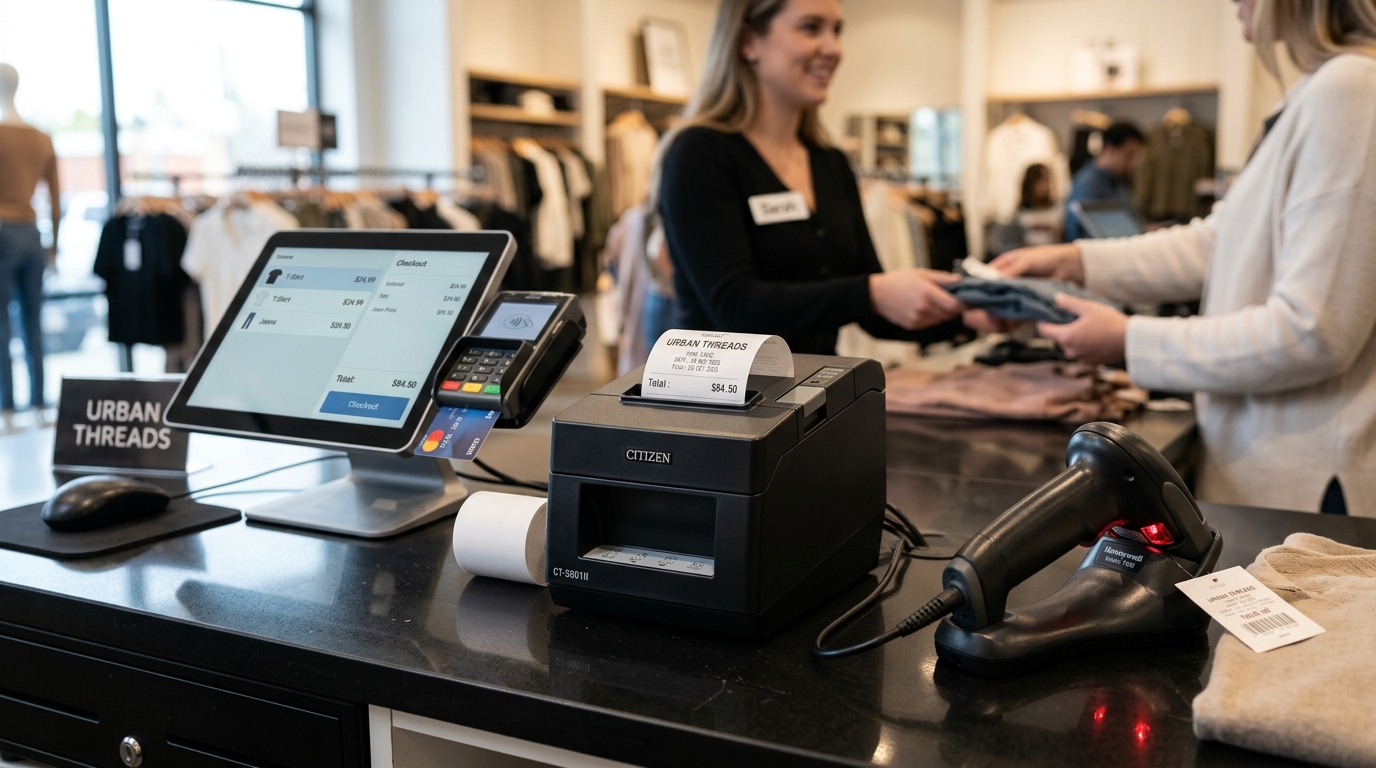
The Citizen CT-S series represents a robust and versatile line of point-of-sale (POS) receipt printers, renowned for their reliability, high-speed performance,. Ease of use.Within this extensive family, models like the CT-S601, CT-S310II, and CT-S651 stand out as popular choices across various retail.
Hospitality environments. However, for a business owner, IT administrator, or support technician, navigating the nuances between these models can be challenging.The CT-S310II is celebrated as an eco-friendly, entry-level powerhouse, offering exceptional value.
A compact footprint, making it ideal for standard receipt printing tasks. Stepping up, the CT-S601 offers faster print speeds and enhanced durability, designed to withstand the rigors of high-volume transactions.The CT-S651 further builds upon this foundation by introducing a front-exit design,.
Protects against spills and debris, making it the premier choice for bustling kitchen environments or crowded bar areas. Despite their physical and functional differences, identifying the precise model you are working with is crucial.The specific model dictates everything from.
Drivers to install, to compatibility with various POS software, and the correct procedure for loading paper or troubleshooting hardware errors. Attempting to install CT-S310II drivers for a CT-S601, for instance, can lead to communication failures and garbled prints.
In this comprehensive guide, we will provide a detailed methodology for accurately identifying your Citizen CT-S series printer.We will explore the distinguishing features of the CT-S601, CT-S310II, and CT-S651,. Outline a straightforward process to find your exact model number.By mastering this model identification process, you ensure that you are applying the correct configurations, maintenance procedures, and support resources, ultimately maximizing the efficiency.
Lifespan of your POS hardware.
Why This Happens
The difficulty in distinguishing between Citizen CT-S series models stems primarily from their shared design language. The modular nature of POS hardware.Many POS printers share similar rectangular chassis, color schemes (typically dark gray or white), and basic button layouts (Power.
Feed).At a quick glance, especially in a dimly lit restaurant or a busy. Retail counter, a CT-S601 can look remarkably similar to other models in the lineup.
Furthermore, the model number is rarely printed in large, bold letters on the front of the device for aesthetic reasons.Instead, it is usually relegated to a small manufacturing label located on the underside or back panel of the printer,. Can be difficult to access when the printer is integrated into a tight POS workstation.Another factor contributing to the confusion is the prevalence of OEM (Original Equipment Manufacturer) rebranding or customized casing for specific POS system providers,.
Can obscure the original Citizen branding and model details. The consequences of misidentifying the printer are significant.
Incorrect driver installation is the most common issue.While Windows might install a generic text printer driver that allows basic printing, advanced features like cutting the paper,. Opening the cash drawer, or printing logos will not function correctly without the specific driver for that exact model.Additionally, settings utilities provided by Citizen are model-specific; attempting to push.
Settings to the wrong printer model can corrupt its internal settings.Understanding why identification is challenging underscores the importance of knowing exactly where to look. What features to check to ensure accurate hardware management.
Step-by-Step Fix
- Locate the Manufacturing Label: The most definitive way to identify your Citizen printer is by checking the manufacturing label. Carefully lift or tilt the printer to view the underside (bottom panel) or the rear panel near the connection ports.
- Read the Model Number: Look for a silver or white sticker containing barcodes and regulatory symbols. Search for text beginning with "Model:" or "M/N:". You should see designations like "CT-S310II", "CT-S601", or "CT-S651".
- Identify the Interface Type: While checking the label, also note the interface type, usually listed near the model number (e.g., USB, Serial/RS-232, Ethernet/LAN, Bluetooth). This is critical for downloading the correct driver package.
- Examine the Paper Exit (Front vs. Top): If the label is unreadable, you can identify the CT-S651 by its design. The CT-S651 features a front paper exit, meaning receipts feed out horizontally towards the user. The CT-S601 and CT-S310II have a top paper exit, feeding receipts vertically upwards.
- Check the Control Panel:The CT-S601 and CT-S651 often feature a more complex control panel with multiple LEDs (Power, Error, Paper Out). A Feed button. The CT-S310II typically has a simpler layout, often just a Power LED, Error LED, and Feed button.
- Perform a Self-Test Print: This is a highly reliable method. Turn off the printer. Press and hold the 'Feed' button, then turn the printer on while continuing to hold 'Feed' until it starts printing.The resulting self-test receipt will explicitly list the printer model, firmware (internal software) version,. Interface settings at the very top.
- Check Connected Devices (Windows): If the printer is connected via USB, open 'Printers & Scanners' in Windows settings. Sometimes, Windows will correctly identify and display the specific model name (e.g., 'Citizen CT-S310II') if basic drivers were auto-installed.
- Use Citizen Setup Utility: If you have a connection but are unsure of the model, download the generic Citizen Printer Utility from their website. This software can scan connected USB or network ports and will display the specific model of the detected Citizen printer.
- Compare with Documentation: If you have the original purchasing invoice or manual, refer to it. POS vendors usually itemize the exact hardware models provided with the system.
- Contact Citizen Support:If all physical identifiers are missing or damaged, contact Citizen technical support with. The serial number (also found on the bottom label) to request model identification.
Advanced Troubleshooting
In environments with numerous point-of-sale terminals, managing. Maintaining a fleet of Citizen CT-S series printers requires a systematic approach, especially when dealing with advanced settings issues.
Once you have correctly identified your models, you may encounter challenges related to network connectivity or advanced feature deployment. For networked models (Ethernet/LAN), identifying the printer is only the first step.
You must also manage its IP address.A common issue is IP address conflicts, where the printer. Another device on the network are assigned the same address, leading to intermittent printing failures.Performing the self-test print (holding Feed while powering on) is invaluable here, as it prints the current IP address, Subnet Mask,.
Gateway.If the IP needs to be changed, you must use the Citizen Printer Utility software, connect via USB initially, or use a web browser to access the printer's internal settings page (if supported by the specific model. Firmware (internal software)).Ensuring that the printer's IP is set to 'Static' rather than 'DHCP' is best practice in a POS environment to prevent the address from changing after a power outage,.
Would sever the connection with the POS software.
Another area requiring advanced knowledge is managing the cash drawer kick-out function. Most CT-S series printers have an RJ11 port on the back specifically designed to connect to a cash drawer.The printer acts as a relay; the POS software sends a command to the printer,.
In turn sends an electrical pulse to open the drawer.If the drawer fails to open, first verify the model. Ensure the correct full-feature driver is installed, not just a generic text driver.
Next, check the driver properties in Windows. Look for a tab labeled 'Device Settings' or 'Cash Drawer' and ensure the cash drawer setting is enabled (e.g., set to open before or after printing).Finally, test the physical connection; a damaged RJ11 cable or a mismatched.
Cash drawer voltage (Citizen printers typically support 24V drawers) can prevent operation.For widespread deployments, IT administrators can utilize Citizen's deployment tools to create standardized settings files (containing network settings, logos, and print speed preferences) and push them to multiple identical models simultaneously, significantly reducing setup time. Ensuring consistency across the enterprise.
Mastering these advanced settings aspects elevates your capability from simple identification to comprehensive POS hardware management.
FAQ
What is the difference between top-exit and front-exit printers?
Top-exit printers (like the CT-S601) eject receipts upwards, which is standard for retail counters. Front-exit designs are specifically built to resist spills, crumbs.
Can I use the same driver for all CT-S models?
While they are part of the same family, different models require specific drivers to function correctly. Access all features (like cash drawer control or specific cut modes).
How do I reset my Citizen CT-S printer to factory defaults?
The process varies slightly by model,. Often involves using the physical dip switches located under a small panel on the bottom of the printer, or by using the Citizen Printer Utility software.
What size thermal paper do these printers use?
Most standard Citizen CT-S series POS printers (including the 601, 310II,. 651) use standard 80mm (3 1/8 inch) wide thermal receipt paper.
