


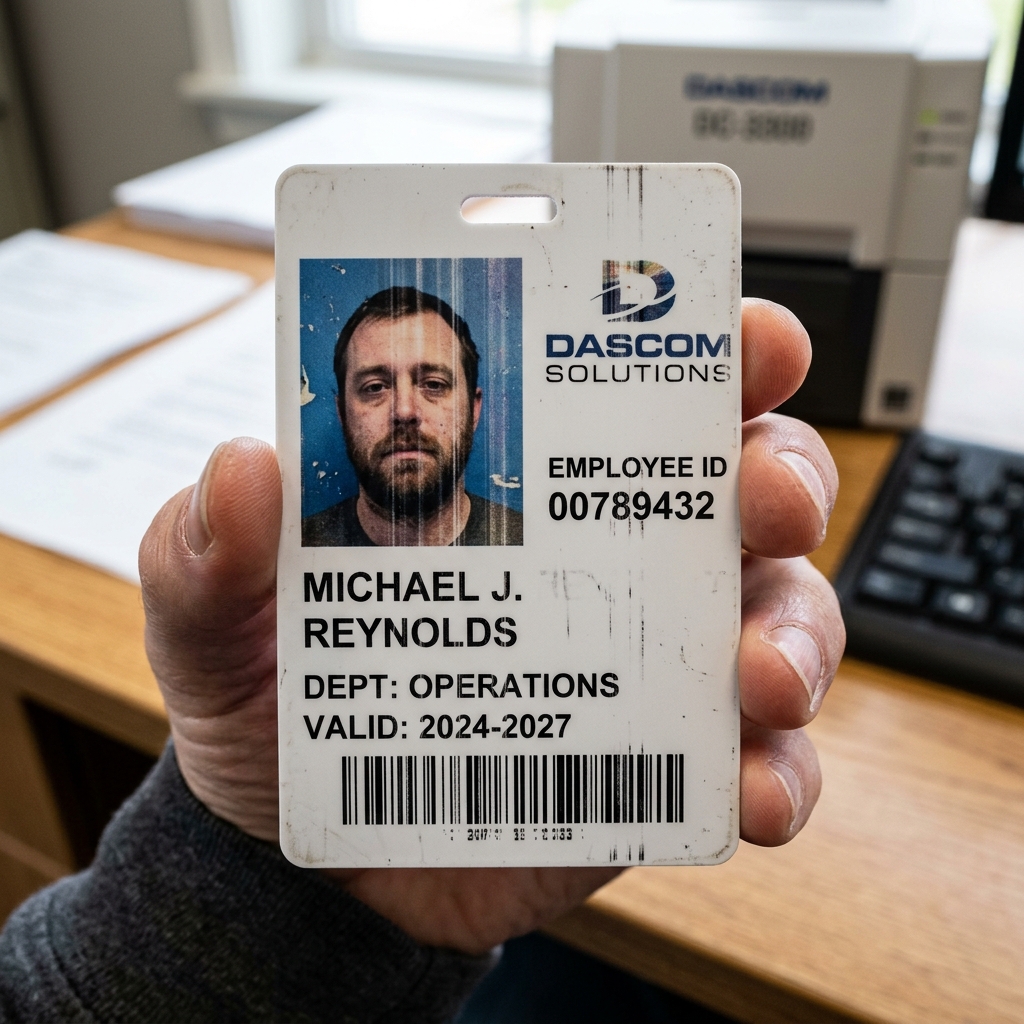
Dascom card printers, such as the DC-7600 and DC-2300 series, are powerful machines utilized by schools. Corporate offices, and government agencies to produce high-security, vibrant ID cards and badges.
Utilizing dye-sublimation or retransfer technology, these printers can print edge-to-edge, full-color designs. However, setting up a card printer requires more precision than a standard paper printer.
Issues like streaky prints, faded colors, and white lines across the ID cards. Are common frustrations that compromise the professional look and security features of the badges.
Achieving optimal print quality requires a perfectly clean environment, the correct driver configurations, and high-quality consumables. This extensive guide will walk you through the meticulous setup process for Dascom card printers.
Provide deep troubleshooting strategies for resolving streaky, inconsistent, or flawed card prints.
Understanding the intricacies of modern hardware is essential for maintaining a seamless workflow. When devices fail to operate as expected, it not only impacts productivity but can also lead to significant operational downtime.
Manufacturers continuously update firmware (internal software), drivers, and software utilities to address emerging bugs. Improve compatibility with new operating systems and network protocols.
Therefore, staying informed about the latest technological updates and adhering strictly to the recommended maintenance schedules is paramount. This foundational knowledge serves as the bedrock for effective troubleshooting, allowing IT professionals.
End-users alike to diagnose complex issues with confidence. By systematically eliminating potential variables—such as faulty cables, outdated software.
Environmental interference—you can drastically reduce the time spent on resolving hardware malfunctions and ensure long-term reliability.
Why This Happens
Streaky prints or white lines on PVC ID cards printed by a Dascom machine are primarily. Caused by a contaminated printhead, dust on the blank cards, or an old, wrinkled printer ribbon.
In direct-to-card printers, the printhead makes physical contact with the PVC card through the ribbon. Any spec of dust or fingerprint oil on the card acts as a barrier.
Preventing the dye from transferring and leaving a white streak or unprinted spot. Furthermore, if the printhead elements are dirty or damaged (a blown pixel).
It will result in a continuous horizontal or vertical white line across every card. Incorrect setup parameters, such as supplying insufficient voltage to the printhead (too low heat setting).
Using third-party, out-of-spec PVC cards that are not completely flat. Can also lead to uneven color distribution and a faded, streaky appearance.
The root causes of these hardware and software discrepancies often. Trace back to a lack of standardization in peripheral communication protocols.
While Universal Serial Bus (USB) and IEEE 802. 11 Wi-Fi standards have bridged many gaps, the built-in nature of device drivers.
Means that even a minor operating system update can disrupt previously stable connections. Furthermore, environmental factors in industrial or retail settings—such as excessive dust, fluctuating temperatures.
Electrical noise from heavy machinery—can degrade electronic components faster than in standard office environments. Preventative maintenance, such as regular physical cleaning and environmental monitoring, plays a crucial role in mitigating these risks.
Ignoring these subtle environmental warning signs frequently exacerbates minor software glitches, culminating in total hardware failure.
Step-by-Step Fix
- Unpack the Dascom card printer, install the input and output hoppers, and place the machine on a level, dust-free surface.
- Carefully install the YMCKO color ribbon, ensuring the supply and take-up spools are seated correctly and the ribbon is taut.
- Load a stack of blank PVC cards into the input hopper. Handling them only by the edges to avoid leaving fingerprint oils on the printable surface.
- Install the Dascom driver softwaree from the provided USB drive. Official website, and connect the printer via USB or Ethernet.
- Run a cleaning cycle immediately. Navigate to the printer driver settings, locate the cleaning utility, and feed an isopropyl alcohol cleaning card through the machine.
- Open the printer cover and use a cleaning swab to gently. Wipe the thermal printhead in one direction to remove any factory dust.
- In the Dascom printing preferences, verify the card type is set correctly (e.g., PVC, PET) and the ribbon type matches what is installed.
- Design a test ID card using your badge software (like CardExchange. Asure ID) with full-color blocks to test edge-to-edge quality.
- Print the test card and inspect it under bright light. Adjust the printhead temperature/color correction sliders in the driver if the colors appear washed out.
Executing these steps requires careful attention to detail. Skipping a diagnostic phase or rushing through a firmware (internal software).
Update can result in a "bricked" device, leaving it entirely inoperable. It is highly recommended to perform these maintenance tasks during off-peak hours to minimize disruption to your business operations.
Documenting each change you make—such as new IP addresses, driver versions. Modified settings settings—will create an invaluable reference log for future troubleshooting.
If you manage a large fleet of devices, utilizing centralized endpoint management software can automate many of these settings pushes. Ensuring uniformity across your organization and drastically reducing the manual labor required to maintain hardware health.
Advanced Troubleshooting
Advanced troubleshooting for persistent print quality issues may involve adjusting the printers mechanical calibration and retransfer settings. If you are using a retransfer model (like the DC-7600) and the image is streaky.
Flaking, you may need to adjust the transfer roller temperature. Speed to ensure the retransfer film adheres properly to the card surface.
For direct-to-card models, check the ribbon tension sensors; a loose ribbon can. Cause "ribbon wrinkle," which manifests as diagonal colored streaks across the card.
Use the Dascom diagnostic software to recalibrate the ribbon sensors. If a perfectly straight, sharp white line persists across all cards regardless of cleaning.
This indicates a blown pixel on the printhead, which cannot be repaired and requires a complete printhead assembly replacement.
In cases where standard operating procedures fall short, engaging with deep-level diagnostic tools becomes necessary. System administrators might need to employ packet sniffers like Wireshark to intercept.
Analyze the raw data packets traveling between the host machine and the peripheral device. This level of analysis can reveal malformed network requests, latency spikes, or unauthorized broadcast storms that disrupt communication.
Additionally, reviewing the Windows Event Viewer or Linux Syslog can uncover underlying operating system errors that indirectly affect peripheral performance. When hardware degradation is suspected, using multimeters to test power supply voltage stability.
Inspecting internal circuit boards for blown capacitors can isolate the physical failure points. Engaging the manufacturers tier-two support with this detailed diagnostic data usually expedites the RMA (Return Merchandise Authorization) process.
Yields specialized beta firmware (internal software) designed to patch highly specific edge-case bugs.
We also strongly advise creating a robust backup strategy for all device configurations. Many modern peripherals offer the ability to export their settings to an XML or JSON file.
By securely storing these settings backups on a central server. You can rapidly provision replacement hardware in the event of an unrecoverable failure.
Training your frontline staff on basic triage—such as identifying error light codes, safely power-cycling equipment. Replacing consumable supplies correctly—forms the first line of defense against prolonged downtime.
Cultivating a proactive maintenance culture rather than a reactive repair mentality ultimately. Translates to lower total cost of ownership and higher overall operational efficiency.
FAQ
Why are there white unprinted spots on my ID cards?
White spots are usually caused by dust or debris on the blank PVC cards before printing. Always keep the card hopper closed and handle cards by the edges.
How often should I run a cleaning card through the printer?
It is a best practice to run a routine cleaning cycle every time you replace the ribbon. Typically every 250 to 500 prints, to maintain optimal printhead health.
Can I use pre-punched cards in a Dascom printer?
Using pre-punched cards is generally not recommended for direct-to-card printers as. The printhead can catch on the hole and suffer permanent damage.
What does a "Ribbon Break" error mean?
This means the color ribbon has snapped, usually due to excessive printhead heat or a card jam. You can tape the ribbon back together, wind it past the break, and resume printing.