


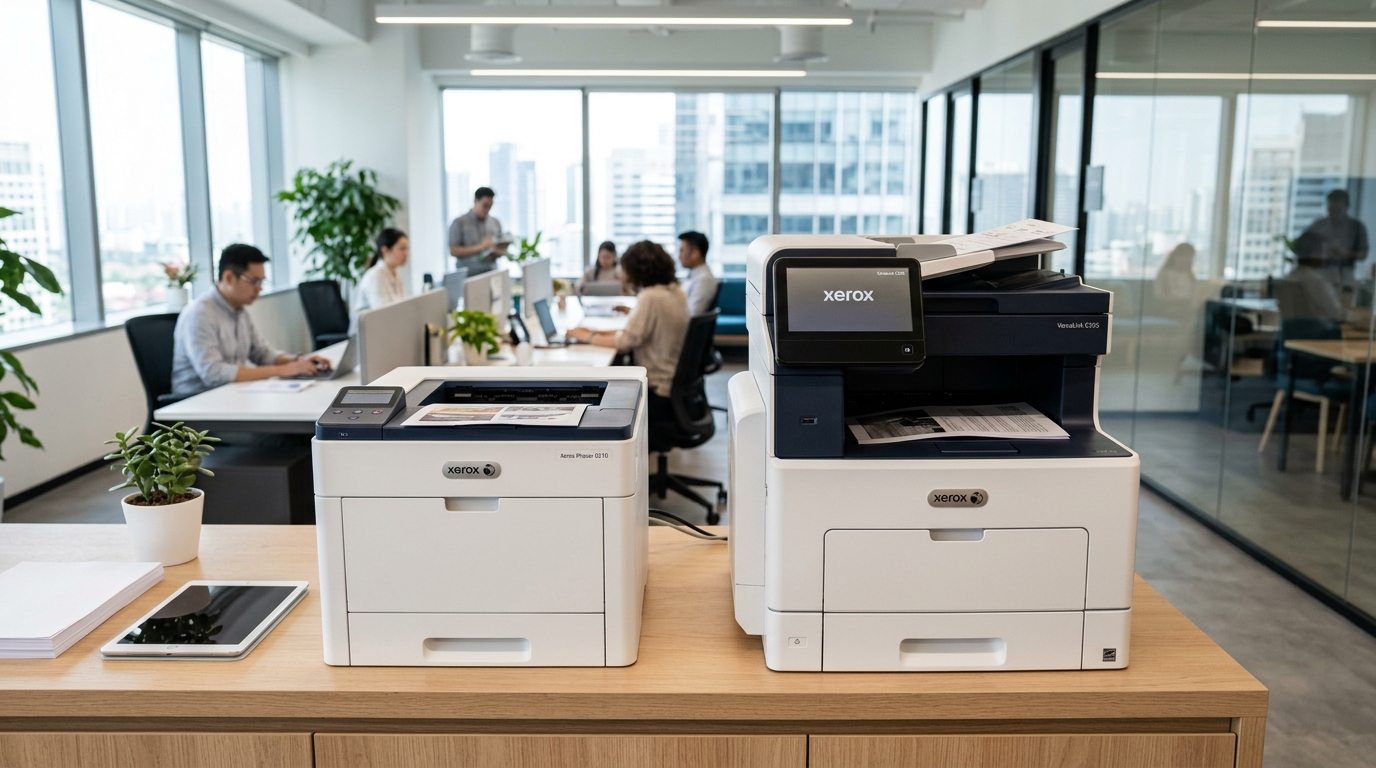
Comprehensive Troubleshooting: Xerox Phaser 6510 Errors vs.
Xerox offers a diverse range of color laser printers designed for small to medium-sized workgroups. The Phaser 6510 is a highly popular, single-function color printer.
Known for excellent output quality at a lower initial price point. In contrast, the VersaLink C505 and C605 series are advanced, multi-function enterprise devices built on.
Xerox's modern ConnectKey technology platform, designed for higher volume, complex workflows, and stringent security environments. While they share some underlying xerographic principles, their hardware architectures, firmware (internal software) platforms.
Also, Consequent error handling mechanisms are vastly different. Understanding these differences is crucial for IT professionals tasked with managing a mixed fleet or deciding on an upgrade path.
When troubleshooting, applying a fix intended for a Phaser 6510 to. A VersaLink C605 is often ineffective and can sometimes exacerbate the issue.
The Phaser 6510 utilizes a more traditional, straightforward logic controller and a simpler mechanical paper path. The VersaLink series, however, operates essentially as a specialized computer with a complex.
Touchscreen interface, embedded apps, advanced sensor arrays, and a highly modular internal design. Error codes on the Phaser tend to be direct hardware fault indicators, while VersaLink.
Errors often require navigating through software states, network communication protocols, and complex electro-mechanical interlocks.
This deep-dive technical guide will compare the common error profiles of the Phaser 6510 against the VersaLink C505/C605 series. We will explore how to diagnose and resolve fuser faults, transfer belt issues, imaging unit failures.
Also, Network connectivity problems specific to each platform's unique engineering, ensuring you can accurately bring your equipment back online.
Understanding the Architectural Differences: Phaser vs.
To effectively troubleshoot, one must understand what happens under the hood. The Phaser 6510 is a traditional GDI/PCL printer.
It receives processed print data from the computer and executes the physical printing. Its error codes (often displayed as simple alphanumeric strings on a 2-line LCD) correspond directly to.
Discrete sensors—a paper jam at sensor 1, a depleted cyan toner, or a fuser temperature fault.
The VersaLink C505/C605 series is fundamentally different. Built on the ConnectKey ecosystem, it features a tablet-like capacitive touchscreen and runs a robust embedded operating system.
It processes complex jobs internally, handles app-based workflows (like scanning directly to cloud services), and manages extensive security protocols. Consequently, its diagnostic capabilities are far superior.
A VersaLink won't just tell you there is a jam; its interface will provide an animated, step-by-step visual guide on exactly. This Door to open and which green lever to pull.
However, this complexity means that software glitches, corrupt apps, or network security certificate conflicts. Can manifest as printer errors that have nothing to do with the physical printing hardware.
Supply Architecture: The Phaser 6510 uses integrated toner/drum cartridges for some components but relies on a separate imaging unit and fuser. The VersaLink C505/C605 features highly modular, high-capacity consumables.
The toners are massive, and the drum cartridges (imaging units) are entirely separate, specialized components designed for extreme longevity. Replacing components on a VersaLink is generally more straightforward due to color-coded, tool-less latches.
However, Resetting the life counters often requires navigating the administrative menus on the touchscreen rather than simple physical chip reads.
Step-by-Step Fix: Common Errors and Resolutions
- Resolving Fuser Errors (010-xxx or 058-xxx):
- Phaser 6510: A fuser error (like 010-397) usually indicates an overheating or under-heating condition. Power off the printer, unplug it, and wait 30 minutes. Remove the fuser unit (accessed from the rear) and inspect the rollers for melted toner or torn film. If damaged, replace it. If visually intact, reseat it firmly. If the error persists after a reboot, the fuser's internal thermistor has blown, and the unit must be replaced.
- VersaLink C505/C605: VersaLink fuser errors are often logged in the NVM (Non-Volatile Memory) as hard faults for safety. Even after replacing the fuser, the error will remain on the screen. You must access the embedded web server (CentreWare Web) or log in as an administrator on the touchscreen. Navigate to the diagnostic tools and manually execute a "Fault Clear" routine to. Reset the fuser logic before the machine will attempt to warm up again.
- Addressing Imaging Unit / Drum Faults (092-xxx):
- Phaser 6510: Imaging unit errors typically involve physical wear, resulting in vertical streaks or repeating defects. The fix is a straightforward hardware replacement. Pull out the transfer belt assembly to access the drums, swap the defective color unit. Also, The printer automatically recognizes the new chip upon boot.
- VersaLink C505/C605: The VersaLink drums are highly sensitive to environmental light. If exposed for more than a few minutes during replacement, they can suffer temporary "light shock," resulting in washed-out prints. If you receive an imaging unit error or poor quality after replacement, leave the printer powered on. However, Idle for 4-6 hours to allow the drum surface to recover its electrical charge properties. Additionally, use the touchscreen tools to run a "Color Calibration" or. "Automatic Gradation Adjustment" to sync the new drum with the transfer belt.
- Network and Connectivity Drops:
- Phaser 6510: Network drops on the 6510 are usually related to IP address conflicts or. A dormant sleep mode that fails to wake up on network activity (Wake-on-LAN failure). Assign a static IP address via the web interface and disable "Deep Sleep" mode in the energy settings.
- VersaLink C505/C605: Connectivity issues here are almost always related to ConnectKey security protocols. If the printer drops off the network or fails to. Scan to email, check the TLS/SSL certificates in the administrative settings. An expired certificate will halt secure SMTP communication. Also, verify that the SNTP (time server) is syncing correctly; if the printer's internal clock is off. By more than a few minutes, Kerberos authentication with Windows servers will fail, breaking network printing and scanning.
- Resolving Complex Paper Jams (077-xxx):
- Phaser 6510: Jams are usually straightforward physical blockages. Open the front and rear doors, remove the toner. Also, Transfer belt, and carefully pull the paper out in the direction of the paper path. Avoid tearing the paper, as tiny scraps blocking optical sensors are the leading cause of phantom jam errors.
- VersaLink C505/C605: With its high speed and duplexing capabilities, a jam in a C605 can involve multiple sheets suspended in different areas. Follow the animated guide on the touchscreen explicitly. Crucially, the VersaLink has specialized decurling rollers in the exit assembly. If you experience frequent jams exiting the machine, especially with thick paper or. Envelopes, adjust the paper type settings in the tray settings on the screen. The machine adjusts roller pressure. Also, Speed based on this setting; an incorrect setting is the primary cause of VersaLink jams.
Advanced Troubleshooting: Firmware (internal software) and ConnectKey Apps
The most significant divergence in troubleshooting occurs at the software level. The Phaser 6510 has monolithic firmware (internal software); you update it. Occasionally via a USB drive or web upload to fix basic bugs. It is a closed system.
The VersaLink series runs a modular, app-based environment. If a specific function fails (e. g. , scanning to OneDrive), the hardware is likely fine, but the ConnectKey app has crashed or requires an update.
Troubleshooting involves logging into the Xerox App Gallery as an administrator. Also, Updating or reinstalling the specific app causing the issue.
Furthermore, the VersaLink's firmware (internal software) (System Software) is vast. Performing a "Software Reset" from the touchscreen (which reboots the OS without deleting network settings).
Resolves 80% of bizarre interface glitches or slow processing issues, much like rebooting a smartphone.
For severe VersaLink software corruption, technicians use an "AltBoot" procedure—booting the. Machine from a specialized USB drive containing a clean system image.
This wipes the hard drive and reinstalls the OS from scratch. This is a complex procedure that deletes all user data, address books.
Also, Custom apps, and should only be attempted when the machine is locked in a boot loop or displaying a fatal system error code (like 116-324) that a standard reboot cannot clear. The Phaser 6510, lacking a complex OS and hard drive, does not require or support this level of software intervention.
FAQ
Why does my VersaLink C505 take so long to wake up compared to the Phaser 6510?
The Phaser 6510 simply has to heat up its fuser and initialize simple motors. The VersaLink is essentially booting a complex computer operating system, loading security policies, establishing network handshakes.
Can I use the same toner cartridges in both the Phaser and VersaLink?
Absolutely not. The toner formulations, cartridge physical shapes, internal auger mechanisms, and DRM microchips are completely different.
My VersaLink screen is frozen on the Xerox logo. How do I fix this?
This indicates a failure during the OS boot sequence. Perform a hard power cycle by flipping the switch behind.
Which printer is better for a small office with 5 users?
If the users only need basic, high-quality color printing, the Phaser 6510 is far more cost-effective. However, if those 5 users need to scan documents directly to cloud storage, require secure print release (swiping a badge to print).