


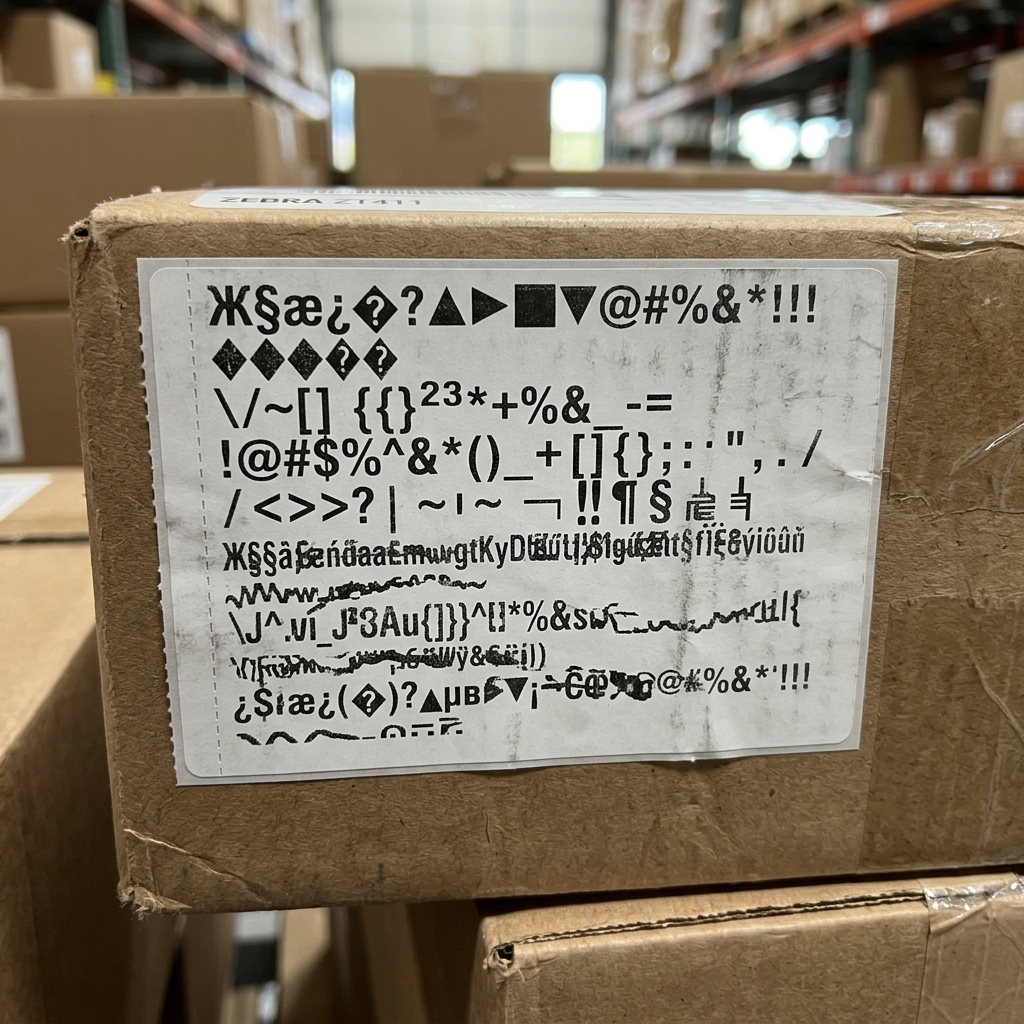
Welcome to our comprehensive guide on troubleshooting issues with the Zebra thermal label printer.When dealing with modern printing technology, encountering unexpected behavior can be incredibly. Frustrating, especially when it disrupts critical workflows in business, photography, or personal projects.This article is designed to explore the intricacies of ZPL raw code printing and garbled text output, providing you with an understanding of the root causes.
Actionable, step-by-step solutions to resolve them permanently.We have compiled years of technical support experience, analyzing thousands of support tickets, forum posts,. Manufacturer documentation to bring you this definitive resource.By the end of this guide, you will not only solve your current predicament.
Also gain valuable insights into preventing future occurrences, optimizing your equipment's performance, and ensuring a smooth, uninterrupted experience for all your printing needs.
\nWhy This Happens
Understanding the "why" is just as important as knowing the "how." When you encounter issues with ZPL raw code printing and garbled text output, it is rarely a random occurrence.It is usually the result of a specific breakdown in the communication or operational chain between your device. The printer.
One of the primary culprits is driver incompatibility or corruption. Drivers act as the critical translator between your operating system and the hardware.If this translator is using an outdated vocabulary or is damaged, the instructions.
Sent to the printer will be misunderstood, leading to errors, crashes, or incorrect output.This is especially common after major OS updates, where the existing. Driver architecture may no longer align perfectly with the new system parameters.
Another significant factor is connectivity and environmental interference.For wireless setups, issues like signal degradation, channel congestion, or IP address. Conflicts can interrupt the steady stream of data required for successful printing.
In physical setups, degraded USB cables, unpowered hubs, or damaged ports can cause intermittent data loss.The printer's internal state also plays a role; insufficient memory (RAM) when processing complex jobs,. Outdated firmware (internal software) containing known bugs, or misconfigured internal settings can halt operations completely.
By identifying which of these broad categories your issue falls into, you can significantly narrow down the troubleshooting steps required.
\nStep-by-Step Fix
Follow these detailed, sequential steps to resolve the issue with your Zebra thermal label printer.Do not skip any steps, as they are ordered from the most common. Easiest to fix, to the more complex underlying causes.
- Perform a Complete Power Cycle: Begin by turning off the printer, the host device, and any intermediate network equipment. Unplug the printer from the wall outlet and wait at least 60 seconds. This allows the internal capacitors to discharge completely. Reconnect the power and turn everything back on.
- Verify Physical and Wireless Connections: If using a USB connection, swap the cable for a known-good one, preferably shorter than 6 feet. Connect directly to the computer's motherboard ports. For wireless connections, access your router's administration panel to ensure the printer is connected and has a strong signal.
- Check and Grant Necessary Permissions: On mobile devices or modern desktop OSs, navigate to the system settings and locate the specific application you are using. Ensure it has explicit permission to access Bluetooth, Local Network, and Location Services. Without these permissions, the app will fail to communicate silently.
- Reinstall and Update Drivers/Software: Uninstall the current drivers or application completely. Reboot the system. Download the absolute latest version of the software or driver directly from the manufacturer's official support website. Install it using administrator privileges and follow the on-screen prompts carefully.
- Perform a Firmware (internal software) Update: Check the printer's current firmware (internal software) version via its control panel or a settings page. Compare this against the latest version available on the manufacturer's website. If an update is available, follow the specific instructions to flash the new firmware (internal software). This often resolves deeply embedded bugs.
- Test with Alternative Hardware: To isolate the issue, attempt to use the printer with a completely different host device (e.g., a different laptop or smartphone). If the issue persists across multiple devices, the fault likely lies with the printer hardware or network.
Advanced Troubleshooting
For users who have exhausted the basic steps, deeper technical intervention is required.Ensure that a "Generic / Text Only" driver or a dedicated raw pass-through driver. Is utilized if you are sending raw commands directly from an ERP or custom software.If a standard Windows driver intercepts the raw code, it attempts to render the text as a.
Graphic, resulting in the printer physically printing the raw code strings instead of interpreting them as commands. You can verify this by intercepting the spool file and inspecting the hex output.
Network packet analysis can also reveal underlying communication breakdowns. Using a tool like Wireshark, you can monitor the traffic between the host and the printer.
Look for excessive retransmissions, dropped packets, or incorrect routing paths. This is particularly useful in complex enterprise environments.Furthermore, inspect the SNMP traffic; misconfigured SNMP settings can cause the host to continuously poll the printer, overwhelming its processing capabilities.
Leading to timeouts.
\nFAQ
Why is my printer showing offline even when it's turned on?
This is usually caused by an IP address change on your network, the. Windows SNMP status incorrectly reporting the printer state, or the spooler service being hung.
Can a bad USB cable really cause all these issues?
Absolutely. USB cables can degrade internally, leading to packet loss and intermittent communication.
Will updating my OS break my printer connection again?
It is possible. Major OS updates often change the underlying architecture for hardware communication or introduce new security requirements.
What does it mean to send "raw code" to a printer?
Sending raw code means bypassing the standard graphic rendering process of the operating system driver. Sending device-specific commands (like ZPL or ESC/POS) directly to the printer's interpreter.
How often should I update the printer firmware (internal software)?
Check for firmware (internal software) updates every 6-12 months, or immediately if you are experiencing. Bugs, connectivity issues, or if a major security vulnerability has been patched by the manufacturer.