


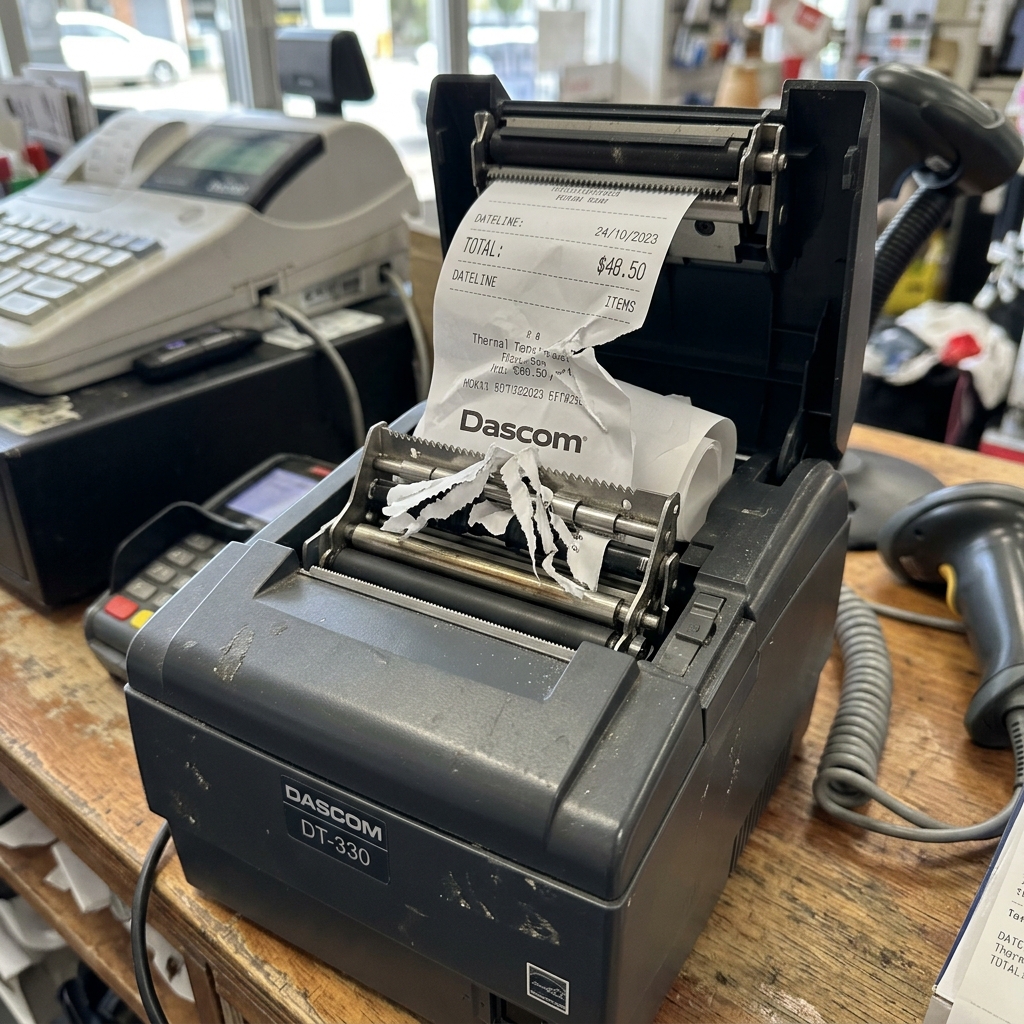
Dascom thermal printers are highly regarded for their durability and speed, making them popular choices in retail, hospitality. Healthcare environments.
A key feature of these printers is the auto-cutter mechanism. This neatly severs each receipt or ticket, presenting a professional look to the customer.
However, when the Dascom printer stops cutting the paper, or worse, when the cutter mechanism jams completely, it creates an immediate bottleneck at the point of sale. Receipts tear unevenly, paper rolls bunch up inside the casing, and error lights begin to flash.
In this detailed repair and maintenance guide, we will explore the mechanical and software-related reasons behind Dascom auto-cutter failures. We will provide a thorough walkthrough on how to safely clear jams, lubricate the mechanism.
Adjust driver settings to ensure your printer returns to its optimal cutting performance.
Understanding the intricacies of modern hardware is essential for maintaining a seamless workflow. When devices fail to operate as expected, it not only impacts productivity but can also lead to significant operational downtime.
Manufacturers continuously update firmware (internal software) (internal software), drivers. Software utilities to address emerging bugs and improve compatibility with new operating systems and network protocols.
Therefore, staying informed about the latest technological updates and adhering strictly to the recommended maintenance schedules is paramount. This foundational knowledge serves as the bedrock for effective troubleshooting, allowing IT professionals and end-users alike to diagnose complex issues with confidence.
By systematically eliminating potential variables—such as faulty cables, outdated software, or environmental interference—you can drastically reduce the time spent on resolving hardware malfunctions and ensure long-term reliability.
Why This Happens
Cutter jams and failures in Dascom thermal printers are usually caused by a combination of paper dust accumulation, using the wrong paper thickness, or software missettingss. Over time, thermal paper sheds fine dust and fibers that coat the gears and blades of the auto-cutter mechanism.
When this dust mixes with ambient humidity, it forms a sticky residue that binds the moving parts. Additionally, using paper stock that is thicker than the printers specifications can overstress the cutter motor, causing it to stall mid-cut.
From a software perspective, the print driver or the Point of Sale software must send the correct ESC/POS command to trigger the cut action. If the driver is corrupted, or if the POS system is configured for a tear-bar printer instead of an auto-cutter, the mechanical blade will simply never activate, leaving you with one continuous, uncut receipt.
The root causes of these hardware and software discrepancies often trace back to a lack of standardization in peripheral communication protocols. While Universal Serial Bus (USB) and IEEE 802.
11 Wi-Fi standards have bridged many gaps, the built-in nature of device drivers means that even a minor operating system update can disrupt previously stable connections. Furthermore, environmental factors in industrial or retail settings—such as excessive dust, fluctuating temperatures.
Electrical noise from heavy machinery—can degrade electronic components faster than in standard office environments. Preventative maintenance, such as regular physical cleaning and environmental monitoring, plays a crucial role in mitigating these risks.
Ignoring these subtle environmental warning signs frequently exacerbates minor software glitches, culminating in total hardware failure.
Step-by-Step Fix
- Immediately power down the Dascom printer and unplug it from the wall to prevent electrical shorts or further motor damage.
- Press the cover release button. If the cover is locked due to a jammed blade, do NOT force it open as this will break the plastic gears.
- Locate the manual cutter adjustment gear (usually found under a small front panel or accessible via a dial near the blade).
- Turn the manual gear in the direction indicated by the molded arrow until the cutter blade fully retracts into its housing.
- Once the blade is retracted, gently open the top cover and remove the crumpled paper roll and any torn scraps from the paper path.
- Use a can of compressed air to blow out all accumulated paper dust from the cutter assembly and sensor areas.
- Lightly dampen a cotton swab with isopropyl alcohol and carefully wipe the edge of the cutter blade to remove adhesive or residue.
- Reinstall a fresh roll of standard thermal paper, close the cover securely, and power the printer back on.
- Navigate to the Windows Control Panel > Devices and Printers, right-click your Dascom printer, and select Printing Preferences.
- Under the Document Settings or Device Options tab, ensure the "Paper Cut" option is set to "Partial Cut" or "Full Cut" at the end of the document.
Executing these steps requires careful attention to detail. Skipping a diagnostic phase or rushing through a firmware (internal software) (internal software) update can result in a "bricked" device, leaving it entirely inoperable.
It is highly recommended to perform these maintenance tasks during off-peak hours to minimize disruption to your business operations. Documenting each change you make—such as new IP addresses, driver versions, or modified settings settings—will create an invaluable reference log for future troubleshooting.
If you manage a large fleet of devices, utilizing centralized endpoint management software can automate many of these settings pushes, ensuring uniformity across your organization and drastically reducing the manual labor required to maintain hardware health.
Advanced Troubleshooting
If the auto-cutter mechanism continues to jam even after a thorough cleaning, the cutter motor or the internal gears may be worn out. You can perform a diagnostic hex dump test to verify if the printer is actually receiving the cut command (typically 1D 56 41 00 in HEX).
If the command is received but the blade does not move, you may need to open the printer chassis (voiding warranty if applicable) to inspect the drive belt and gear train for missing teeth. In some high-volume environments, applying a very small amount of white lithium grease to the cutter gears can restore smooth operation.
However, if the blade itself is dull or nicked, the entire cutter assembly module must be replaced. Always consult the Dascom service manual for the exact part numbers and torque specifications when replacing internal mechanical components.
In cases where standard operating procedures fall short, engaging with deep-level diagnostic tools becomes necessary. System administrators might need to employ packet sniffers like Wireshark to intercept and analyze the raw data packets traveling between the host machine and the peripheral device.
This level of analysis can reveal malformed network requests, latency spikes, or unauthorized broadcast storms that disrupt communication. Additionally, reviewing the Windows Event Viewer or Linux Syslog can uncover underlying operating system errors that indirectly affect peripheral performance.
When hardware degradation is suspected, using multimeters to test power supply voltage stability or inspecting internal circuit boards for blown capacitors can isolate the physical failure points. Engaging the manufacturers tier-two support with this detailed diagnostic data usually expedites the RMA (Return Merchandise Authorization) process or yields specialized beta firmware (internal software) (internal software) designed to patch highly specific edge-case bugs.
We also strongly advise creating a robust backup strategy for all device settingss. Many modern peripherals offer the ability to export their settings to an XML or JSON file.
By securely storing these settings backups on a central server, you can rapidly provision replacement hardware in the event of an unrecoverable failure. Training your frontline staff on basic triage—such as identifying error light codes, safely power-cycling equipment.
Replacing consumable supplies correctly—forms the first line of defense against prolonged downtime. Cultivating a proactive maintenance culture rather than a reactive repair mentality ultimately translates to lower total cost of ownership and higher overall operational efficiency.
FAQ
How do I force open a jammed Dascom printer cover?
Never pry the cover open. You must turn the manual cutter release dial until the blade retracts.
Why is it doing a partial cut instead of a full cut?
Most receipt printers default to a partial cut to prevent the receipt from falling on the floor. You can change this to a full cut in the Windows print driver under the cutter settings.
Can I sharpen the cutter blade?
No, thermal printer cutter blades are precision-honed and often serrated. Attempting to sharpen them will misalign the cutting edge and cause permanent damage.
Is my paper too thick for the cutter?
Standard thermal receipt paper is about 50-80 microns thick. If you are using heavy cardstock or multi-ply paper, you will exceed the cutters torque rating, causing frequent jams.
