


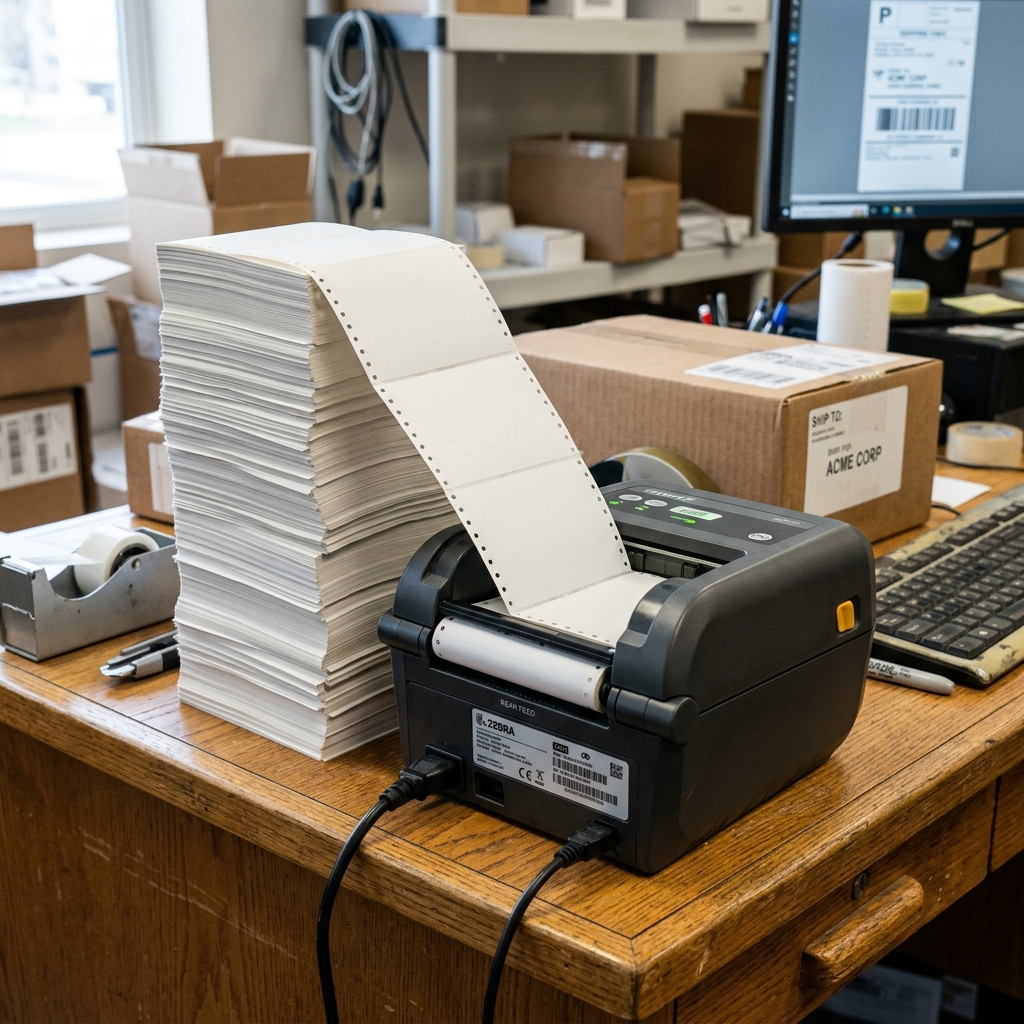
Troubleshooting Zebra Label Roll Guides and Fanfold Setup
Welcome to our comprehensive guide on Industrial thermal transfer and direct thermal printing with Zebra. When you are dealing with Zebra Label Roll Guides.
Fanfold Setup, it can be an incredibly frustrating experience that disrupts your workflow and reduces productivity. In this extensive article, we will cover every single aspect of this issue, from the underlying causes to the most advanced troubleshooting techniques available.
Understanding the intricacies of Industrial thermal transfer and direct thermal printing with Zebra is essential for any professional or enthusiast who relies on these systems daily. The technology behind this involves complex interactions between hardware and software.
A failure at any point can lead to the symptoms you are experiencing. The nuances of Industrial thermal transfer and direct thermal printing with Zebra require a methodical approach.
We must consider the environmental factors, the age of the equipment, and the specific configurations applied. Many users overlook the basic foundational elements when attempting to resolve Zebra Label Roll Guides.
Fanfold Setup, leading to wasted time and unnecessary expenses. By following this guide, you will gain a profound understanding of the mechanics.
Electronics involved, empowering you to tackle not only this specific problem but also related issues that may arise in the future. Proper maintenance and proactive monitoring are key to preventing such failures.
Why This Happens: Media handling, platen rollers, and media sensors
To effectively resolve the issue, we must first dive deep into Media handling, platen rollers, and media sensors. The core of the problem often lies in the delicate balance between the electronic signals and the mechanical responses.
When examining Zebra Label Roll Guides and Fanfold Setup, engineers often find that the root cause is a degradation of communication along these pathways. For instance, physical wear and tear on components can increase electrical resistance, causing signals to drop below the required threshold.
Additionally, software updates or misconfigurations can alter the timing of these signals, leading to erratic behavior. Furthermore, the environmental conditions such as humidity, temperature fluctuations.
Dust accumulation play a significant role in the reliability of Media handling, platen rollers, and media sensors. Microscopic debris can bridge electrical contacts or insulate them, leading to intermittent failures that are notoriously difficult to diagnose.
Thermal expansion and contraction can cause micro-fractures in solder joints or misalign critical optical sensors. Therefore, a holistic view of the operating environment is crucial when analyzing why Zebra Label Roll Guides.
Fanfold Setup occurs.
Step-by-Step Fix
Follow these meticulously detailed steps to resolve the problem. Do not skip any steps, as the solution often lies in the cumulative effect of these adjustments.
- Adjust the media guides to lightly touch the edges of the label stock.
This step is critical. When you perform this action, you are directly addressing a common point of failure. Take your time to ensure it is done correctly. Inspect the surrounding components while you are at it. Often, a secondary issue may be visible upon close inspection. Document your findings. If this step alters the behavior of the device, note the changes carefully, as they will inform any further troubleshooting required. - Configure the printer for Fanfold media in the Zebra Setup Utilities.
This step is critical. When you perform this action, you are directly addressing a common point of failure. Take your time to ensure it is done correctly. Inspect the surrounding components while you are at it. Often, a secondary issue may be visible upon close inspection. Document your findings. If this step alters the behavior of the device, note the changes carefully, as they will inform any further troubleshooting required. - Calibrate the media sensor for the specific label gaps or black marks.
This step is critical. When you perform this action, you are directly addressing a common point of failure. Take your time to ensure it is done correctly. Inspect the surrounding components while you are at it. Often, a secondary issue may be visible upon close inspection. Document your findings. If this step alters the behavior of the device, note the changes carefully, as they will inform any further troubleshooting required. - Ensure the platen roller is free of adhesive buildup.
This step is critical. When you perform this action, you are directly addressing a common point of failure. Take your time to ensure it is done correctly. Inspect the surrounding components while you are at it. Often, a secondary issue may be visible upon close inspection. Document your findings. If this step alters the behavior of the device, note the changes carefully, as they will inform any further troubleshooting required. - Adjust the printhead pressure toggles for even heat distribution.
This step is critical. When you perform this action, you are directly addressing a common point of failure. Take your time to ensure it is done correctly. Inspect the surrounding components while you are at it. Often, a secondary issue may be visible upon close inspection. Document your findings. If this step alters the behavior of the device, note the changes carefully, as they will inform any further troubleshooting required.
After completing the enumerated steps above, you must rigorously test the system. Do not assume the issue is resolved without verifying it under normal operating conditions.
Run multiple test cycles. Observe the behavior closely for any signs of regression.
If the problem persists, you may need to repeat the steps with greater scrutiny, paying particular attention to the tolerances. Specifications outlined in your device's service manual.
Advanced Troubleshooting
If the standard procedures fail, we must move to advanced diagnostics concerning Media handling, platen rollers, and media sensors. This requires specialized tools and a deeper understanding of the system's architecture.
You may need to utilize oscilloscopes, multimeters, or built-in diagnostic software provided by the manufacturer. Analyzing the raw data streams or electrical signals can reveal hidden anomalies that are imperceptible through standard testing.
In complex scenarios involving Zebra Label Roll Guides and Fanfold Setup, component-level repair might be necessary. This involves identifying faulty capacitors, resistors, or integrated circuits on the main logic board.
Soldering skills and a thorough knowledge of schematics are required. Furthermore, analyzing the firmware (internal software) code or rolling back to previous versions might uncover software bugs introduced in recent updates.
Always ensure you have a backup of the current settings before attempting these advanced procedures.
FAQ
What is the difference between roll and fanfold setup?
Fanfold feeds from the back slot and requires different tension settings. This is a common question we receive, and understanding the nuance here is vital for long-term maintenance.
Why do my labels track to the side?
The media guides are too loose or the printhead pressure is uneven. This is a common question we receive, and understanding the nuance here is vital for long-term maintenance.
Do I need a special platen roller for linerless labels?
Yes, linerless printing requires a non-stick platen roller and special cutter. This is a common question we receive, and understanding the nuance here is vital for long-term maintenance.
How do I calibrate my Zebra printer?
Hold the feed button until it flashes twice, or use the Zebra driver utility. This is a common question we receive, and understanding the nuance here is vital for long-term maintenance.
